
Hospitals are their own world. You pull up and there's no obvious entrance for deliveries, the car park costs $8 an hour, the building is the size of a small suburb, and your consignment note says "deliver to Pathology" with no further information. If you've never delivered to a hospital before, your first visit can easily eat 30–45 minutes as you wander corridors looking for the right department. Here's how experienced courier drivers navigate hospitals without losing their minds or their schedule.
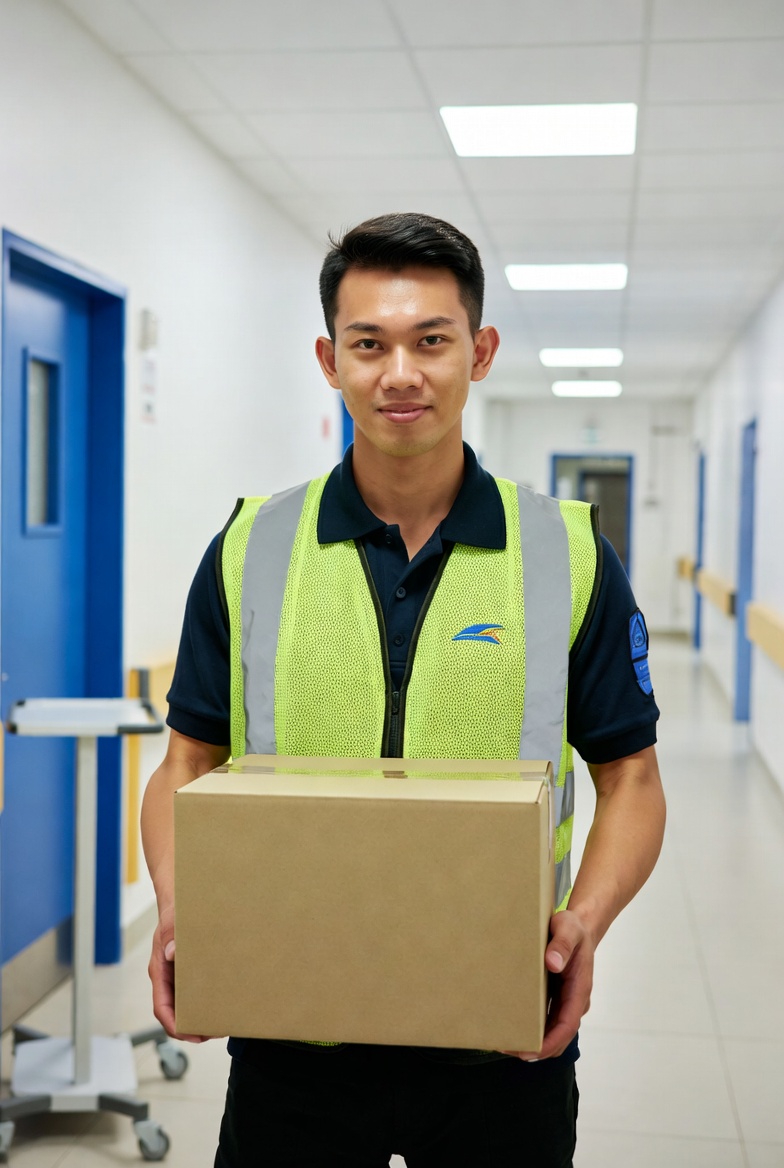
Finding the Loading Dock
Almost every hospital has a dedicated loading dock or receiving area, but it's rarely at the main entrance. It's typically around the back or side of the building, often accessible via a service road. The main visitor entrance is not where you want to be — security will redirect you and you'll waste 10 minutes.
If it's your first time at a hospital, use Google Maps satellite view before you arrive. Look for the service area — it's usually identifiable by the larger vehicle access, roller doors, and bin storage. The Queensland Health facilities directory lists all public hospital locations, but finding the loading dock usually requires a closer look or a phone call to the hospital's main line.
Some hospitals have a central receiving point where all deliveries are dropped off and the hospital distributes internally. Others require you to deliver directly to the department. Ask at receiving — they'll tell you which system this hospital uses.
Getting to the Right Department
Read the consignment carefully. Hospital deliveries often include a department name, building code, or level number. "Building 3, Level 2, Haematology" is specific enough to find. "Hospital" is not — and you'll need to call the recipient or the hospital switchboard for more detail.
Ask at reception or the information desk. Every hospital has one. They can direct you to the specific department and tell you the fastest route through the building. Some larger hospitals have colour-coded corridors or floor lines — follow them.
Security and restricted areas: Parts of hospitals are restricted — operating theatres, ICU, pharmacy stores, biohazard areas. You may need to sign in, show ID, or wait for someone to meet you. Never wander into restricted areas looking for a department — ask and wait.
Handling Medical Freight
Temperature-sensitive items: Some hospital deliveries are temperature-controlled — pathology samples, medications, blood products. These are usually in special packaging (esky boxes, insulated bags) with temperature indicators. Don't leave these sitting in a hot van. Deliver them first on your run or keep them in an insulated section.
Urgency: Hospital freight can be genuinely urgent. Medical supplies, equipment parts, or pathology specimens might be needed for a patient procedure happening that day. If a hospital delivery is on your manifest, prioritise it. The difference between delivering at 9am and 2pm could be medically significant.
Signatures and chain of custody: Hospital deliveries almost always require a signature. The receiving person needs to verify what's been delivered and sign for it. Don't leave medical freight without a proper handover — even if someone says "just leave it there." Get the signature.
Parking
Hospital parking is expensive and competitive. Use the loading dock area if permitted — most hospitals allow delivery vehicles to park at the dock while loading/unloading. If you need to enter the building, ask security or receiving about short-term delivery parking. Many hospitals have a designated 15–30 minute bay near the loading area.
Don't park in emergency bays, ambulance zones, or disabled spots — ever. Hospital parking inspectors and security are very active, and a fine from a hospital car park is just as real as one from the council. If you can't find a spot, double-park briefly at the dock with hazards on and be fast.