
City deliveries are a different world to suburban runs. The streets are narrower, parking is nonexistent, buses are pulling in and out of stops, pedestrians step off kerbs without looking, cyclists appear in your blind spot, and traffic lights change every 30 metres. Everything moves slowly but everything happens fast. If you're doing CBD or inner-city deliveries, the way you drive needs to change completely from your suburban habits.
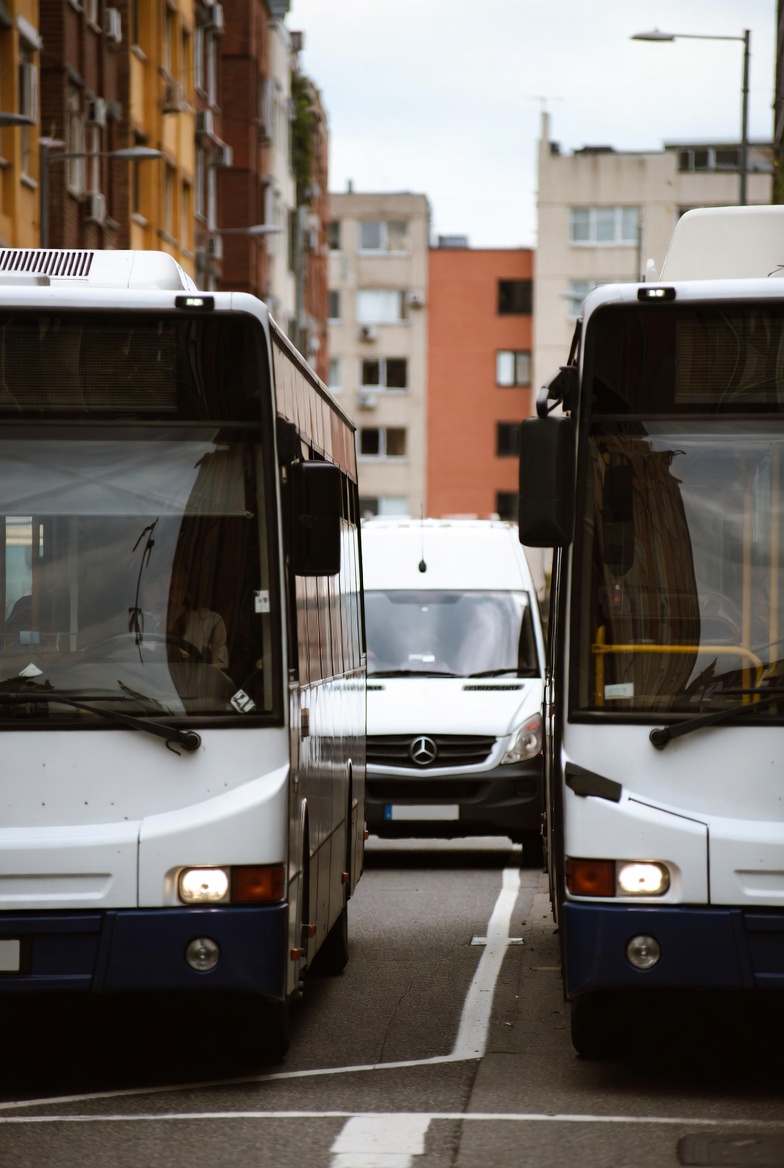
Buses
Buses pulling out from stops: In most Australian states, you must give way to a bus indicating to pull out from a bus stop in a 60km/h or under zone. This isn't courtesy — it's law. When you see a bus with its indicator on, slow down and let it merge. Trying to race past a bus pulling into your lane is illegal and dangerous.
Don't overtake buses at stops: Passengers step off the bus and cross the road, often without looking. Children especially — they dart across to the other side. If a bus is stopped, slow down and pass with extreme caution, watching for pedestrians emerging from in front of or behind the bus.
Bus lanes: Don't drive in bus lanes unless your area's rules specifically allow delivery vehicles during certain hours. In most cities, bus lanes are buses, taxis, and sometimes cyclists only. Fines for driving in a bus lane are steep — $300+ in most states.
Pedestrians
According to Queensland Government pedestrian road rules, drivers must give way to pedestrians at all marked crossings and when turning at intersections where pedestrians are crossing. In practice, city pedestrians cross everywhere — marked crossings, between parked cars, mid-block, and against red lights. You cannot rely on pedestrians following the rules.
Expect the unexpected. Someone looking at their phone will step off the kerb. Someone running for a bus will dart across four lanes. Someone with headphones won't hear your van. Drive as if every pedestrian on the footpath is about to walk in front of you — because eventually, one will.
Loading zones and footpath crossings: When you pull out of a loading zone or cross a footpath to exit a driveway, pedestrians have right of way. Stop, look both ways, and wait for a gap. Don't nose out and expect people to walk around you.
Shared zones: Many city areas have shared zones where vehicles and pedestrians share the road space. The speed limit is typically 10km/h and pedestrians always have right of way. In these zones, you crawl — and you accept that your delivery pace is going to be slow.
General City Driving Tips
Reduce speed. Suburban driving pace doesn't work in the city. Drop to 30–40km/h on city streets even where the limit is 50. The reaction time you gain is the difference between stopping in time and hitting someone.
Check mirrors constantly. Cyclists and e-scooters appear quickly and ride in spaces your mirrors don't always cover. Before every turn, lane change, or door opening, do a head check.
Know the one-way streets. City centres are full of one-way streets that will send your GPS in circles. Learn the one-way pattern in your regular delivery area and plan your approach to each stop accordingly.